

Sketchbooks are one of the most important parts of an artist's tool kit! Many artists rely on their sketchbooks for capturing facets of their process and for developing their creativity. The journey of personal discovery and progress that can be taken in a sketchbook can take a lifetime for one artist, while another can fill it in an hour! There are no definitive timelines for sketchbooks – only you can choose the time, place, and pace in which you work.
It's incredibly important to find the right sketchbook for you so that your creative adventures become personal and meaningful journeys. In an earlier blog, we looked at five famous artists and how they used their sketchbooks to inform their creative journeys. In this blog, we'll help you choose the right one for your style, medium, and creative purpose.
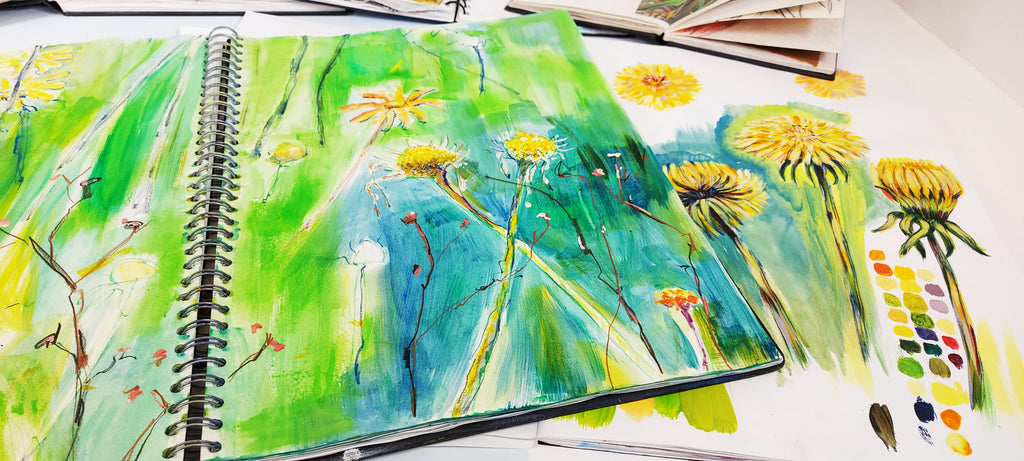
© All images courtesy of Ellie Jakeman
What are Sketchbooks Used For?
Artists use sketchbooks and sketch pads as an essential tool for monitoring their progress, pushing ideas forward, and developing themes. They are used for capturing thoughts and testing out ideas, used to test and foster new narratives, and to push and develop designs.
They are used as visual diaries and for notetaking, working out compositions, practising textures and details and colour palettes, and testing out new media or mixed media. Sketchbooks and sketchpads have been part of the creative process since humanity begun binding paper and they'll always be kept by artists to chronologically record their timeline and to see how far they have travelled.
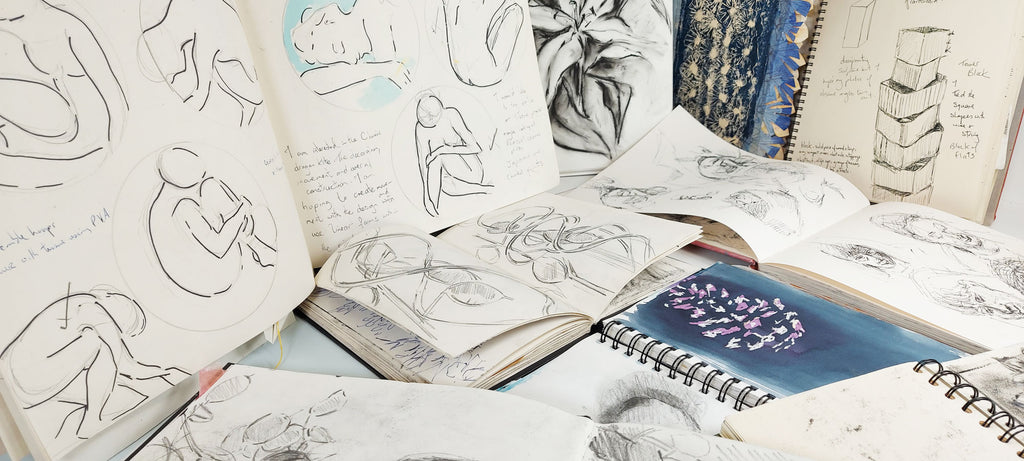
© All images courtesy of Ellie Jakeman
Part One of this series looked at famous artist's sketchbooks; Leonardo da Vinci, George Robert Lewis, JWM Turner, Frida Kahlo, Vincent van Gogh. Historical sketchbooks have given us the privilege to look back at some of the very beginnings of the most iconic work the art world has ever seen. But what do professional artists use today, and what should a beginners sketchbook look like?
Below we have answered some of your questions in the hope that you can eliminate the sketchbooks that will not serve your purpose and help you to find the ones that will!

What Should I Consider Before Buying a Sketchbook?
Before purchasing a sketchbook, there's a few questions you ought to ask yourself. These questions will help you to decide what kind of sketchbook you need.
Explore Our Sketchbooks Collection Here
What size do I need? Do I want a portable sketchbook or something for my studio?
We offer a range of sizes from A6 up to A1! If you're planning on taking your sketchbook with you for reportage or plein air artwork, we recommend using a smaller size like A5, but if you like to work at a large scale, A2 or A1 is the choice for you.
Am I using it for painting? What painting medium do I use?
Wet media require a sketchbook paper that's of a thicker weight to accommodate the water and to prevent buckling of the paper. We recommend a gummed pad for heavy use of water techniques, or sketchbooks that are specifically designed with higher gsm (grams per square metre) pages.
What sketchbook should I buy for pen and ink work?
If you're working specifically with ink washes, you should go for a watercolour sketchbook with heavier weight paper and thicker pages. If you're working just with fineliner pens, smoother paper such as Bristol board is the way to go.
What sketchbook should I buy for drawing with graphite or coloured pencils?
Hot-pressed paper and toned paper work very well with dry media like graphite pencils and coloured pencils, especially if you wish to use solvents with them.
What sketchbook should I buy for mixed media?
There are some great mixed-media sketchbooks that will cater for a lot of different wet media and dry media techniques.

© All images courtesy of Ellie Jakeman
What shape do I want my sketchbook? Landscape, Portrait, Square?
That entirely depends on your personal preference! Landscape sketchbooks are great for – you guessed it – landscape artists, while portrait sketchbooks are versatile enough for artists of all kinds. Square sketchbooks often come in smaller sizes, making them a great option for artists looking for a more portable. We offer lots of sizes and shapes at ARTdiscount, so you're bound to find the right one for you.
Do I want toned paper or white paper?
Toned paper is great for use with coloured pencils, pastels, graphic markers and for using with fine liners and white get pens. However, if you want an all-rounder choice, you can't go wrong with simple white paper.
Do I need a bleed-proof marker paper pad so I can use my Promarker or COPIC markers?
Yes, bleed-proof paper will allow heavy use of alcohol-based markers and graphic pens, making them a great option for urban sketching.
Do I need a sketchbook with a smooth paper surface or one with a slight tooth?
Smooth paper will allow you to add lots of details to your sketches, whereas paper with a slight tooth is perfect for more expressive oil and chalk pastels, graphite, and charcoal drawings.
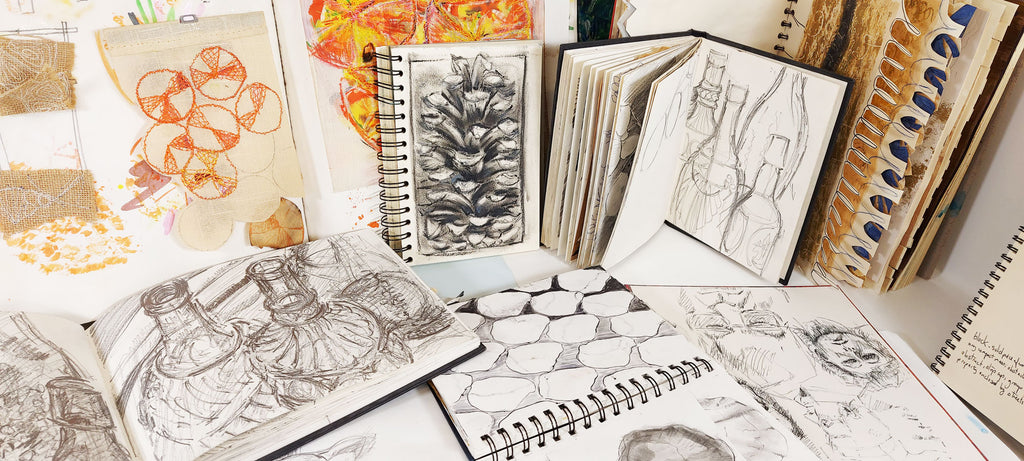 © All images courtesy of Ellie Jakeman
Tips for Working in a Sketchbook
-
Allot a time where you can have a moment to yourself; morning, afternoon, or evening. Even if it's for only 15 minutes a day! You'll benefit from the escape and over time get faster and more proficient at sketching.
-
Keep your sketchbook handy at all times. Backpack or handbag-sized sketchbooks are great for using while you are out and about, especially on gallery or museum visits where a camera can't be used. Aim to take with you a small pencil case containing some art supplies, such as coloured pencils, pencils, biro, fine liners, or gel pens. Dry media is easier to transport than wet media and is great for both rapid sketches and adding fine details.
-
If the white of the paper scares you a little, create light washes with watercolour or ink on the page before you start. Aim for a different transparent colour on each page or lightly sponge two colours to create a slight background texture. Alternatively, you could work in a toned sketchbook with tan-toned paper.
-
Have more than one sketchbook and try out a few different sizes. Ideas can change and develop once they have been tested out on various-sized papers and on various scales.
-
Don't be too precious about your outcomes; your sketchbook will not judge you and only your eyes will see your work (unless you post it on social media that is!).
-
Sketch means sketch, not finished pieces. Be brave and try new mediums, singularly or together.
-
Stay loose and concentrate on the journey not the destination.
-
Enjoy the process of being lost in your sketchbook. Be an adventurer, explore uncharted territory.
Types of Sketchbooks and Sketch Pads
Below we have compiled a list of the most common and best sketchbooks available with links direct to our website for further information.
Case-Bound Sketchbooks

© All images courtesy of Ellie Jakeman
These sketchbooks are bound like a traditional hardback book, with durable card covers and securely-fastened sheets. They're a great option for plein air and reportage artists, as the can simply slip them into their bags and take them out for illustrative adventures. The case binding ensures that that your work is safely protected when closed, making them great for travelling artists.
Some artists also prefer them for their slightly slicker, cleaner aesthetic over their wire-bound counterparts. Moleskine sketchbooks are very popular among urban sketchers, watercolourists, and illustrators for this very reason. These hard-wearing sketchbooks feature attractive cardboard covers with acid-free paper, rounded corners, bookmarks, and elastic enclosures to make for a premium drawing experience.
Wire-Bound Sketchbooks

© All images courtesy of Ellie Jakeman
Wire-bound sketchbooks are incredibly versatile; their wire binding allows them to be laid down completely flat, which you can then use to create double page spread. It also allows for them to be folded back on itself, which you can use to hold with one hand and draw with the other. On top of that, the pages can easily be torn out and rearranged if needed. These sketchbooks are great for artists interested in experimentation and those who aren't afraid of getting a little messy.
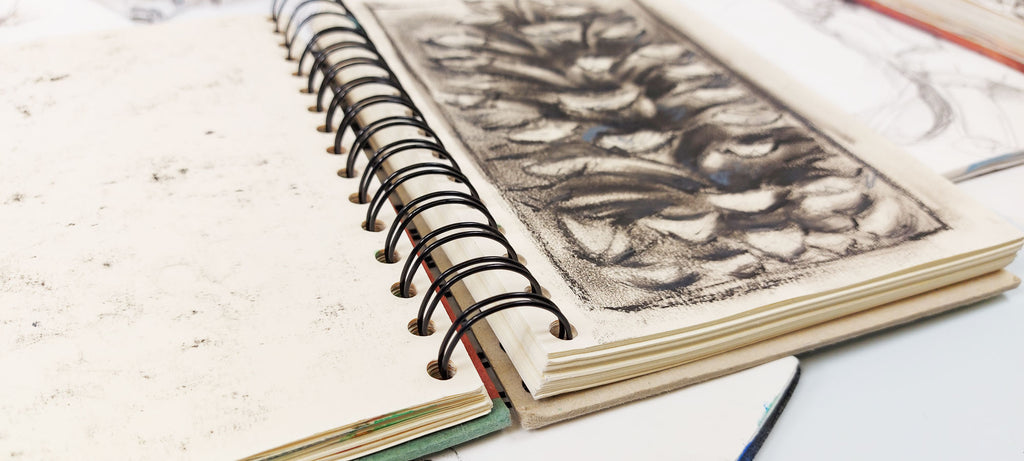
© All images courtesy of Ellie Jakeman
Many left-handed artists prefer working in wire-bound sketchbooks as they can change the orientation of the pages to to be more comfortable when working, giving them more freedom of movement.
We offer wire-bound sketchbooks in a wide range of shapes and sizes, with options available for artists of all skill levels and budgets. If you're interested in primarily working with light watercolour techniques, gouache, and inks, we recommend purchasing a sketchbook with a minimum weight of 200gsm, and for heavier techniques you should go for 300gsm and above. For mixed media techniques, use extra heavyweight paper – anything over 250gsm is good.
Bullet Journals

Have you joined the world of bullet journaling? The Derwent Bullet Journal is a notebook, diary, to-do list and sketchbook all in one place. Inject some creativity into your organisation this year by staying on top of things in style.
Complete with subtle dots on each page to help frame your lists, graphs, and doodles, let your imagination run riot to spice up everyday planning.
Derwent's superfine, free-flowing, permanent Line Maker pens are the perfect companion for weaving intricate designs.
Toned Sketchbooks
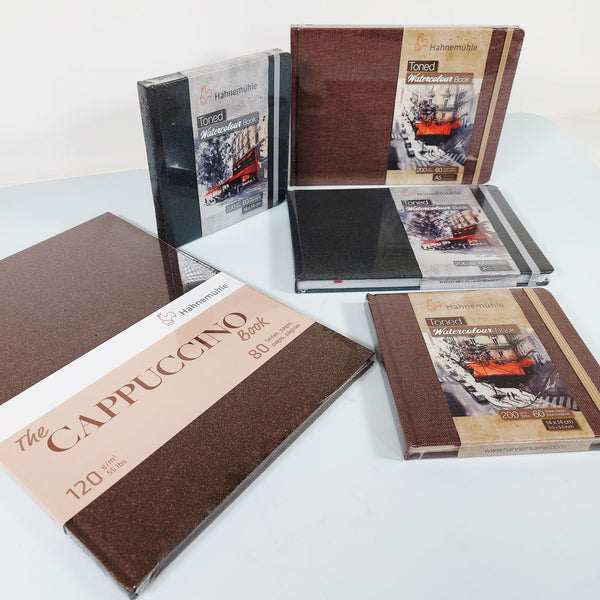
© All images courtesy of Ellie Jakeman
Toned paper is a great starting point for studies. These sketchbooks feature sheets with a mid-tone colour that makes it easy to consider both darker tones and highlights. They're a great resource for practicing value in your work, allowing you consider only the details of shadows and highlights without having to spend time filling in the mid-tones. When used with white pens, pencils, and pastels, you can make your work pop and give it an extra degree of dimensionality.
Many artists also enjoy using toned paper to reduce eye strain. When used on sunny days or in bright conditions, the mid-tones of these sketchbooks make for a much more comfortable drawing experience, especially when working over in long sessions.
Bleedproof Pads
If you're working with Winsor & Newton Promarkers or COPIC Markers, we recommend investing in a bleedproof marker pad. The paper in these pads is designed to work well with alcohol-based ink markers and prevent bleed to ensure clean lines and maximum precision.
They allow you to layer your inks without risking the quality subsequent pages, and thanks to their smoother, Bristol-board-like finish, you can create highly detailed work with ease, making them ideal for comic & manga art, fashion design, technical illustration, and more.
Concertina Sketchbooks

These uniquely-bound sketchbooks are great for working on very long themes or for urban sketching. Great for quick rapid mark making activities or for abstract image, shape and pattern making. Let your imagination run wild, linking pages with colours, and line. Excellent if you want to create an extremely wide angle, panoramic image!

© All images courtesy of Ellie Jakeman
Let's Get Sketching!
We hope reading this article has helped demystify the kinds of sketchbooks you'll find on the market. Sketchbooks are a great way of recording your progress as an artist and for creating quick, loose sketches without fear of people judging your work.
We have many more sketchbooks listed on our site, and we heartly recommend you take a look! If you're interested in starting your own sketching journey, check out the ARTdiscount Sketchbook Collection using the link below.


