

If you like the richness of oil paints but don't like using traditional solvents, water-mixable oil paints might be for you! These innovative, low-odour paints offer the same buttery texture and similar slow drying times of traditional oils, but don't require the harsh solvents and turpentine you have to use with regular oil colours.
Water-mixable oil colours clean up easily with just soap and water, making them a safer option for both artists and the environment. They produce fewer hazardous fumes, which reduces the risk to an artist's health when working in smaller studios, at home, or in shared spaces. Though they generally dry faster than oil colours, they still share a similar extended drying time when compared to other mediums, such as acrylics and watercolours. This enables you to have a great deal of control over your work, with the extended drying time allowing you to blend your colours on the canvas as you would with a traditional oil paint.
In this guide, we'll take a look at water-mixable oils, exploring the options available and giving you some top tips to make the most of out of this versatile medium. Let's get started!

Who Are Water-Mixable Oil Paints Made For?
This may sound a bit cliché, but to tell you the truth, they're made for everyone! A lot of professional artists enjoy water-mixable oils for their slightly quicker drying times and safety compared to traditional oil paints. They're also a great option for beginners and students as they're much easier to clean up, which makes them a great option for learning oil painting techniques without the lengthy clean up time.
Water-mixable oils are also a good choice for eco-conscious artists. The water-based clean up and lack of harmful solvents reduces the environmental impact of your paints. This also makes them great for those who are sensitive to solvents or who work in confined spaces.
What Water-Mixable Oil Paints are Available?

Winsor & Newton Artisan Water-Mixable Oil Paints
Winsor & Newton Artisan Water Mixable Oil Colour is a genuine oil colour made from modified linseed oil and modified safflower oil.
It has been specifically developed to appear and work just like conventional oil colour. The depth of colour, buttery consistency, lightfastness, opacity/transparency, performance and drying times of Artisan allow artists to use this range for all oil colour techniques.
Artisan is popular with oil painters who do not like the smell of turpentine or wish to cut down or eliminate the use of traditional solvents. As a result painting with Artisan is less hazardous, which can be particularly useful in art schools or enclosed studio spaces.

Daler-Rowney Water-Mixable Oil Paints
Daler-Rowney Georgian Water Mixable Oil colours offer artists the possibility of experiencing oil painting without the need for solvent-based mediums. An alternative to traditional oil paints, Georgian Water Mixable Oils can be thinned, mixed, and washed using water.
All Daler-Rowney Georgian Water Mixable Oil colours offer high levels of lightfastness, pigment load, and durability. The viscosity and smooth texture of the colours out of the tube mirror traditional oil colours and can be used for impasto techniques or thinned down with water they can create wash effects similar to watercolours. These water mixable oil paints surface dry between five and seven days and gives no colour shift from wet to dry.
Mediums & Additives for Water-Mixable Oil Paints:
While water alone can be used to thin the paint, there's also a wide range of special water-mixable mediums that can enhance the flow, finish, and drying time of your water-mixable oils. We recommend using these mediums over simply using water, as adding too much can weaken the paint's structure.
While water can be used to thin the paint, special water-mixable oil mediums can enhance flow, gloss, or drying time. Avoid adding too much water, as it can weaken the paint’s structure. There are some great brands below that work cohesively with Water Mixable Oil paint.
Below, you can see a range of the water-mixable oil paint mediums we have available on the ARTdiscount website. For a more up-to-date look, check out the Water Mixable Oil Paint Collection.

|
Daler-Rowney Water Mixable Oil - Linseed Oil (75ml)A Water Mixable Oil Medium for Oil Colours. Use this medium to thin, mix, and glaze water-soluble oil colours without breaking down the paint's pigment cohesion |
 |
Daler-Rowney Water Mixable Oil Medium for Oil Colours (75ml)A Water Mixable Oil Medium for Oil Colours. Use this medium to thin, mix, and glaze water-soluble oil colours without breaking down the paint's pigment cohesion. |
 |
Winsor & Newton Artisan Water Mixable Linseed Oil - 75mlWinsor & Newton Artisan Water Mixable Linseed Oil is a slow drying oil that reduces the consistency and improves the flow of Artisan Water Mixable Oil Colours. It also increases the gloss and transparency. It can be cleaned up with water. |
 |
Winsor & Newton Artisan Water Mixable Fast Drying Medium - 75ml
|
 |
Winsor & Newton Artisan Water Mixable Impasto Medium - 60ml TubeWinsor & Newton Artisan Water Mixable Impasto Medium is an impasto and texturing medium for use with Artisan oil colours. Always mix thoroughly into the colour. For thick impasto, build the texture in several layers allowing each layer to dry first. This medium speeds the drying of the colours. |
What are the Characteristics of Water-Mixable Oil Paints?
Mixing & Dilution:
One of the great advantages of Water-Mixable Oils is that you can – as the name suggests – mix them with water to alter the consistency and create thinner, less opaque layers. In this diluted state, the paint can be applied thinly as an initial base layer to block out your composition. When these oils are diluted with water, the drying time is slightly quicker than normal, and they'll dry to a matt finish with visible brush strokes in your work.
Once you've finished blocking in your painting and the layer has dried, you can apply your second layer over the top. This second layer can be diluted with water-mixable painting medium or water-mixable linseed oil which will improve the flow of your paint and extend the drying time, which is great for the main painting stage. Depending on the medium you use, your paints will dry to either a gloss or satin finish.
As with traditional oil paints, water-mixable oils are very easy to mix with a palette knife, enabling secondary, tertiary and new colour palettes to be created.
Water-mixable oils are intermixable with very small amounts of traditional oil paints, however, you should be careful while doing this. If you use too much conventional oil paint, you will reduce the water-solubility of your oil which result in you needing to use solvents to clean your brushes.
If you want to thicken your water-mixable oils to work with more textural, impasto-style techniques, you can use mediums such as Winsor & Newton Artisan Water Mixable Impasto Medium.
Blending & Layering:
Water-mixable oils blend on the canvas and palette similarly to traditional oils, allowing for smooth gradients in your work. They dry much slower than acrylic paints but still faster than traditional oils, giving you an extended working time without as long a wait between layers.
These paints may be applied directly from the tube onto canvas, canvas board, wooden panels, or oil paper, either undiluted or without the addition of medium or water for a thick impasto technique.
Different brands will have a slightly different viscosity. Remember that when the water content of these paints have evaporated, the oil pigment will oxidise similarly to traditional oil paint to dry fully. If you have used a thick impasto, this will take a longer time.

You should try to use the Fat Over Lean Principle of painting, similar to regular oil paints. Put simply, this means that the first layer needs to be applied thinly with water as a dilutant and left to dry.
Once dried, subsequent layers (which may be a thicker impasto or richer in pigment colour) can be applied over the top. If you're planning to apply multiple layers of water-mixable oil paint, you can with each subsequent layer add a less water and a little bit more water-mixable oil medium. This will avoid the top layers drying before the base or under layers. If your top layers dry too quickly before your base layers, you may see cracks in the paint.
When applying the final layers of your artwork, it's crucial to transition away from using water as a mixing agent. Instead, focus on utilising solely the water mixable oil medium to achieve the desired consistency and blending effects. This shift will ensure that the final layers possess the optimal properties of the oil paint, including its rich colour saturation, smooth texture, and gradual drying time.
Remember, while water is initially beneficial for thinning the paint and facilitating blending in the early stages, it should be progressively eliminated as you build up the layers. By adhering to this approach, you'll harness the full potential of the water mixable oil paints and achieve a professional-quality finish.
Mediums & Additives:
While water can be used to thin the paint, special water-mixable oil mediums can enhance impasto, flow, gloss, and drying time. Avoid adding too much water, as it can weaken the paint’s structure. Do not mix the mediums together in one jar, always use them separately.
Cleaning Up:
Brushes and tools can be cleaned with water and soap, eliminating the need for harsh solvents. We recommend soaps like The Masters Brush Cleaner, which is suitable for both natural and synthetic bristles. Just rinse your brushes with water first, then use the brush cleaner and rinse again. This will help restore and condition your brushes.
Drying Time:
These paints take longer to dry than acrylics, but may dry slightly faster than traditional oil paints depending on the thickness of application. If you want an even quicker drying time, but can use a fast-drying medium to speed up the process.
Techniques, Tips and Guidelines for Using Water Mixable Oil Paints
Basic Techniques:
Alla Prima (Wet-on-Wet)
Since water-mixable oils dry slower than acrylics, you can blend colours directly on the canvas. Use a soft brush or palette knife for smooth transitions.
Glazing
Thin the paint with a water-mixable oil medium (rather than just water) to create transparent layers. Wait for each layer to dry before adding another for depth and luminosity.
Impasto:
These paints work well for thick applications using a palette knife or stiff brush. Since they dry slower, you can manipulate textures over time.
Underpainting:
Use diluted paint (water or medium) for an initial sketch or for blocking out large areas of colour. Subsequent richer, thicker layers of colour can be blended on top of this initial layer
Scumbling:
Apply a dry brush with little paint over a dry layer to create a broken colour effect.
Our Experiments with Water-Mixable Oil Paints
Testing Opacity

When using your paints for the first time, you should text out the opacity of each paint so that you know what you're working with. We found that with the Seawhite Water-Mixable Oils set that we used, colours like Titanium White, Cadmium Red Deep, Yellow Ochre, and Mars Black were more opaque.
Colours like Burnt Sienna, Cerulean Blue, and Ultramarine, Lemon Yellow and Cadmium Yellow tended to be semi-opaque, whilst colours such as Crimson Lake and Viridian Green were the most transparent.
Testing Tinting Strength

We added small incremental amounts of Titanium White paint to a Secondary colour to monitor the change in pigment strength. Laying down each mixture in a ladder will allow you to see how much Titanium White you will need to create a lighter tint of the same colour.
A Strong tinting strength colour will influence the outcome more than a weaker tinting strength colour. This is a good test to do with different brands of the same colour.
Testing dilution with water to create thin paint for initial first layers

The dark area to the left of the jug handle was painted only adding water to the pigment, hence the brush marks. The actual Jug and handle has had a number of thicker layers of paint added, progressively using less water to dilute and a water mixable oil medium to thin paint.
Dilution with Daler-Rowney Water Mixable Oil medium.

To illustrate how different the finishes are, the lower square has been created with Seawhite’s water mixable oil paint diluted with just water, giving us a dull matt surface.
For the middle square we used water mixable oil medium with the pigment and you can clearly see the sheen on top of the surface. As the pigment oxidizes this sheen will sink into the canvas but it won’t dry completely matt
Creating Vivid Secondary Colours

We mixed Seawhite water mixable oil paints.
Lemon Yellow mixed with Scarlet Lake, and with Cadmium Red Deep, to create a range of orange hues
We then mixed Cadmium Yellow mixed with Scarlet Lake, and with Red Deep, to create a range of orange hues.
Creating Tints and Shades

Testing out Titanium White and Black.
We used mixed Cerulean Blue with increasing amounts of Black to create a variety of shades.
We then mixed Ultramarine Blue with Black to create a deeper variety of shade.
Glazing

We mixed a diluted dark red pigment with Water Mixable oil medium to create a glaze.
We then painted the glaze over a number of dried painted squares.
One coloured square had been diluted with just water providing a matt finish.
One coloured square had been mixed with Water Mixable medium.
The glaze provides a subtle change in colour.
Viscosity of paint

Seawhite’s Water-Mixable Oil Paints have a smooth and creamy viscosity, making it an ideal medium to use for Impasto techniques.
Best Products & Tools to Use with Water Mixable Oil paint
If you want to get the best results from water mixable oils, using the right tools can make a big difference. Here are some top recommendations:
Brushes, Palette Knives and Silicone painting tools
Brushes

Because natural-hair brushes can become damaged by water over time, Synthetic Bristle Brushes work especially well with water-mixable oil paints. Use flat brushes for bold strokes, round brushes for details, and fan brushes for blending.
Silicone Painting Tools
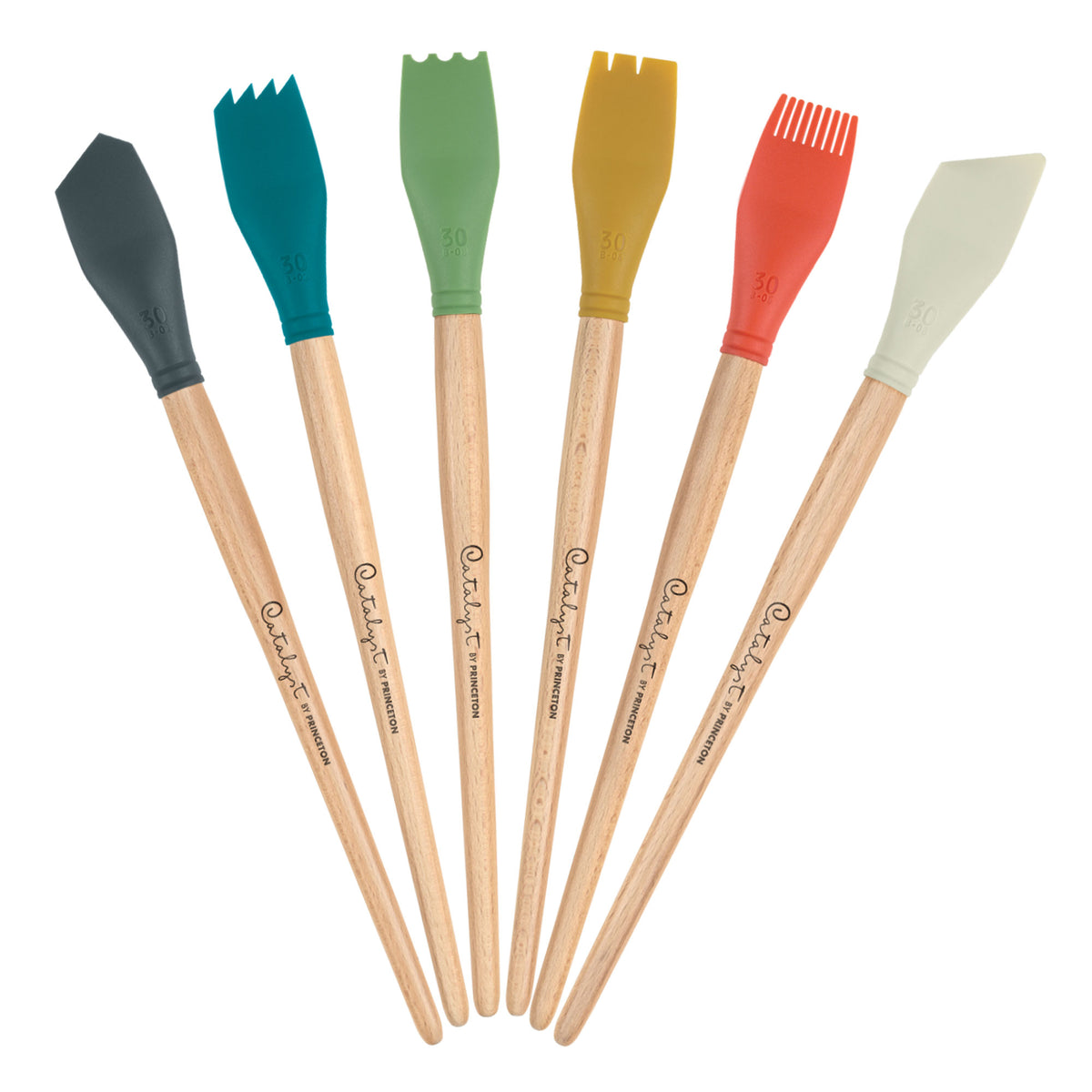
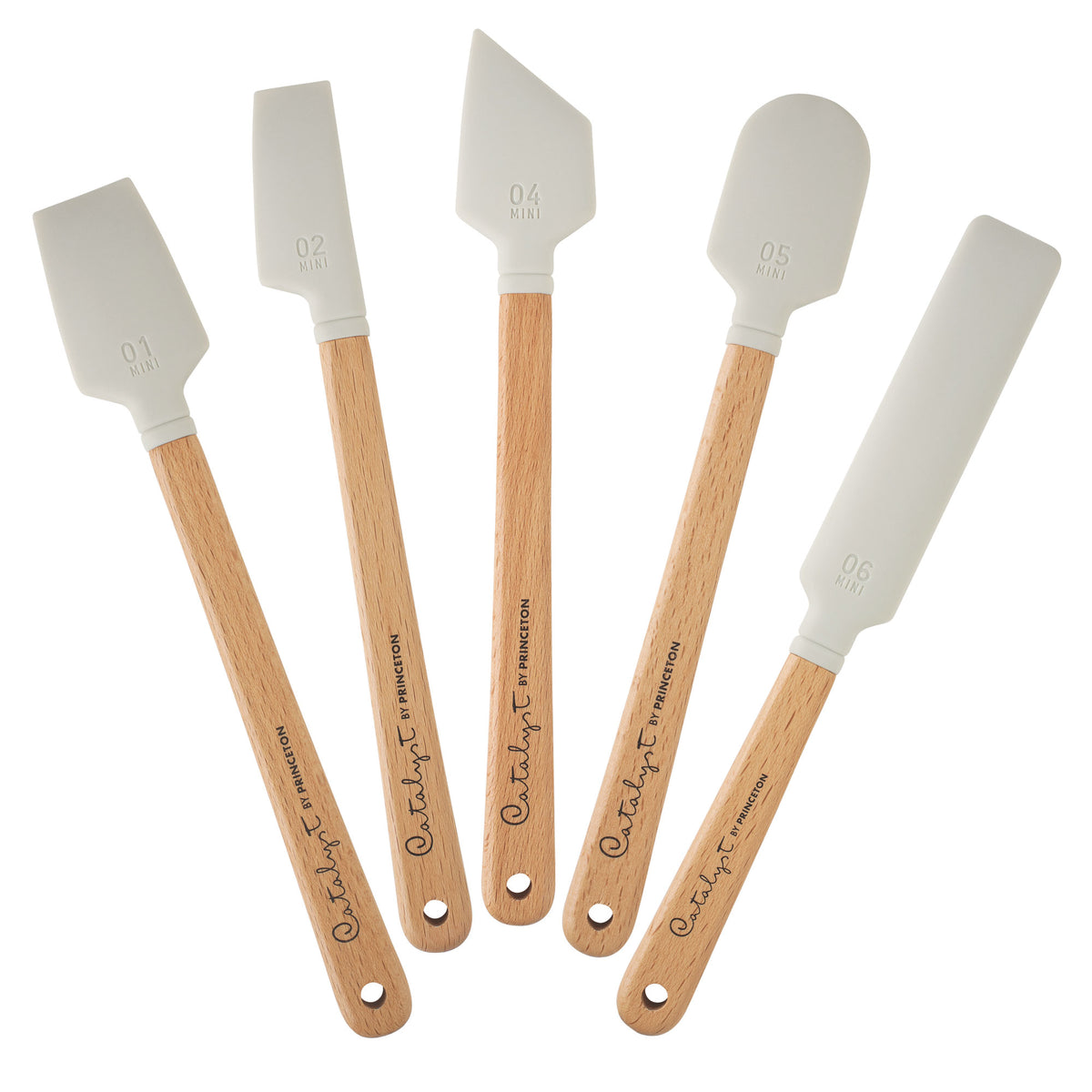
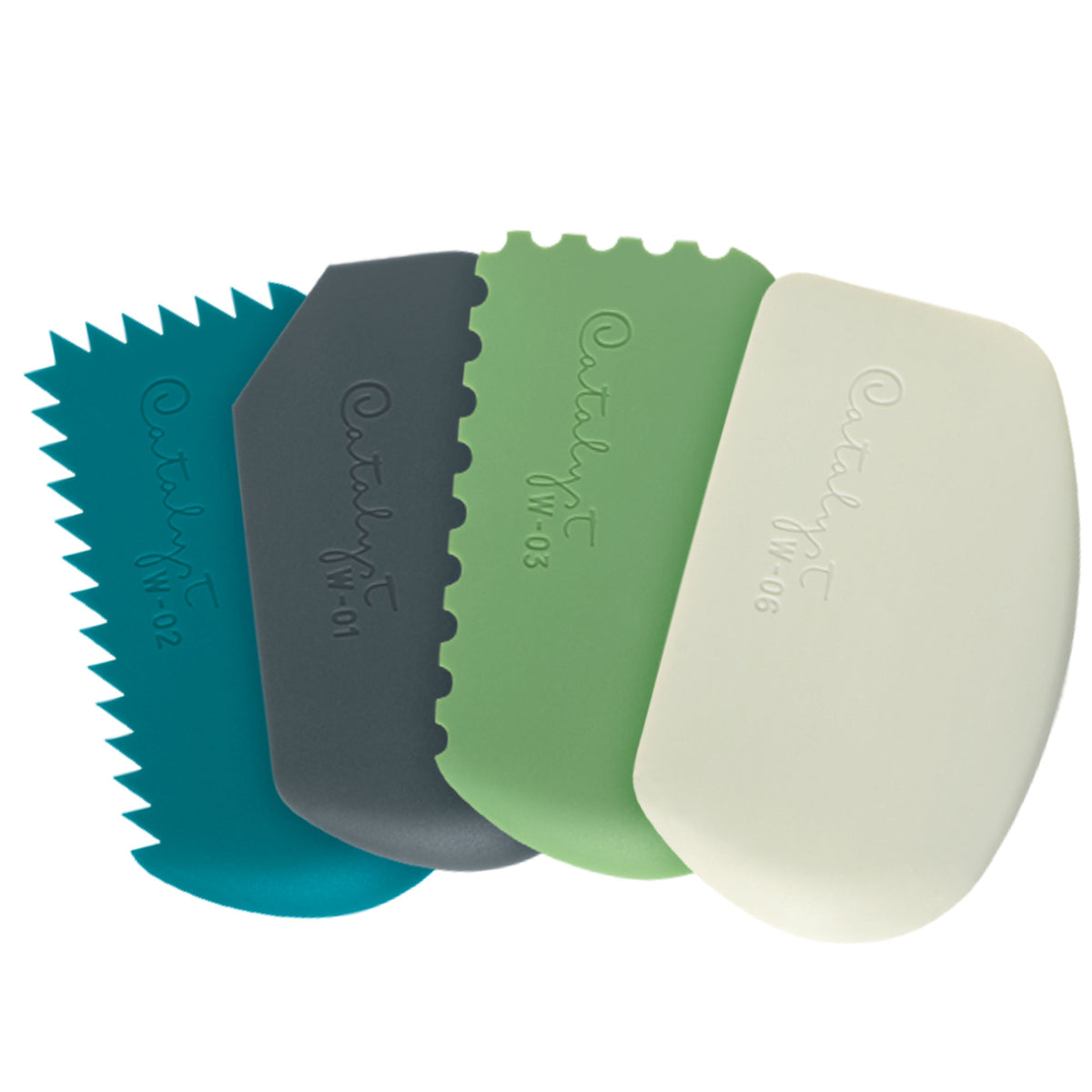
Princeton Catalyst silicone blades are perfect for spreading and blending water mixable oil paints, offering smooth, brushless texture control. Their flexible edges allow for dynamic mark-making and easy clean-up with just soap and water.
|
Princeton Catalyst Silicone Blades |
|
|
Palette Knives for Textured Effects:

Palette knives are great for mixing paints on the palette and for creating thick, textured painting techniques like impasto.
Surfaces and Substrates
Canvas, canvas board, wood panels, or thick paper primed with acrylic gesso. Avoid overly absorbent surfaces, as they may cause the paint to sink in.
Best Canvases and Canvas Boards
ARTdiscount Own-Label Canvases

ARTdiscount Own-Label Canvases provide the perfect painting surface for artists of all levels and budgets. Available in a range of form factors, including stretched canvases, rolls, and boards, these canvases are made from acid-free 100% cotton and are triple primed for easy painting right out of the box.
Winsor & Newton Canvas

Hand-stretched to perfection, built for endurance, and with flawlessly-finished cloth, Winsor & Newton Canvases are the perfect choice for artists looking for a versatile and responsive painting surface.
Liquitex Recycled Canvas

Liquitex Recycled Canvases are made with 100% recycled plastic bottles and are triple primed with highly-pigmented titanium dioxide gesso. These canvases are loved by professional artists and are suitable for use with both acrylic and oil paints.
Oil Painting Paper
Oil painting paper is specially-primed to handle water-mixable oil paints without warping or bleeding. It provides a convenient, portable surface for practice or finished work with rich colour retention.
Seawhite Oil Painting Paper

Seawhite's Oil Painting Paper has a primed, linen-textured surface that allows artists to start painting right away.
Seawhite Cotton Canvas Sheets Pad - 280gsm - 10 Sheets
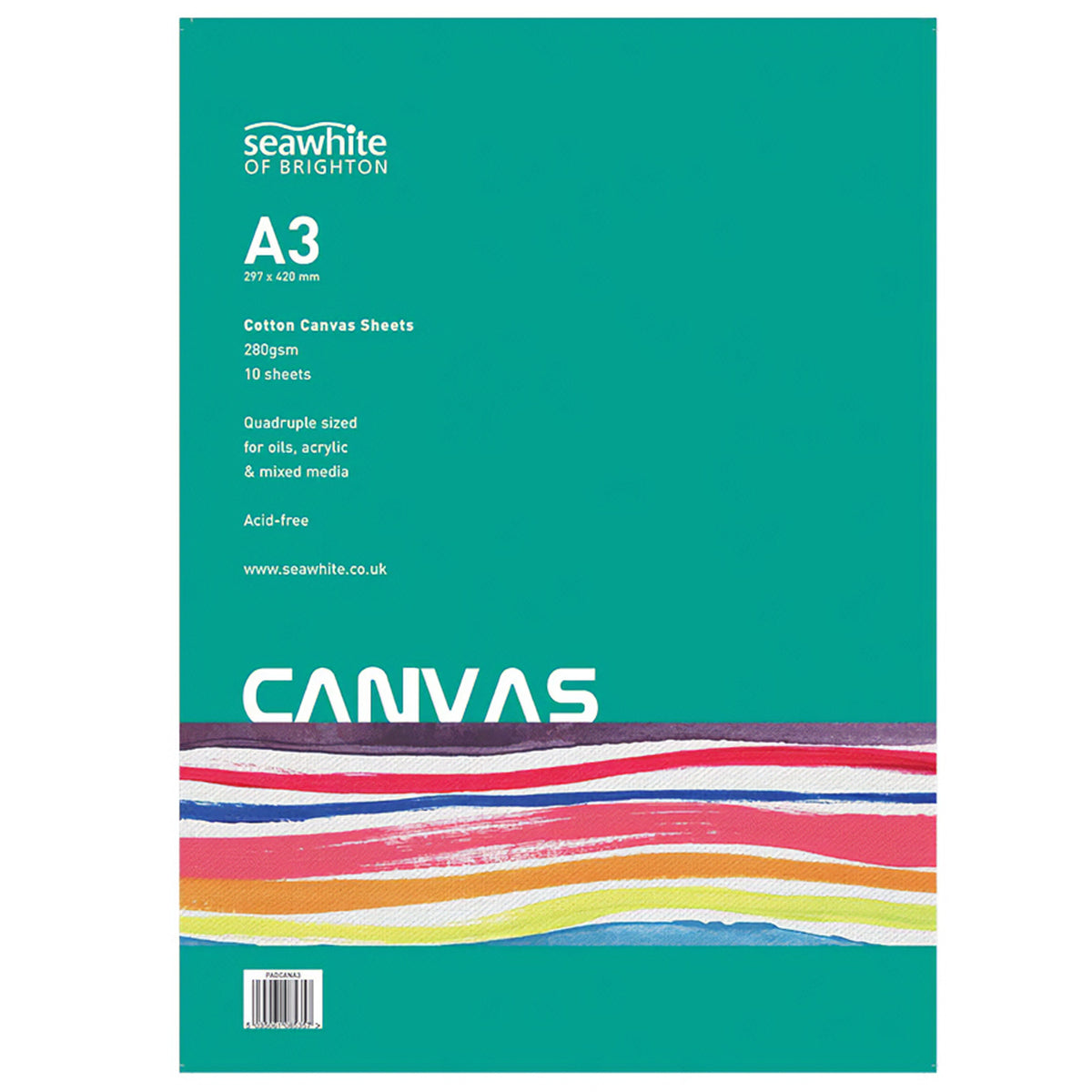
The Seawhite Cotton Canvas Pad is ideal for use with oils, acrylics and mixed media. Its 280gsm, quadrupled-primed surface is acid-free, making for an optimal working surface.
Daler-Rowney Georgian Oil Painting Pad
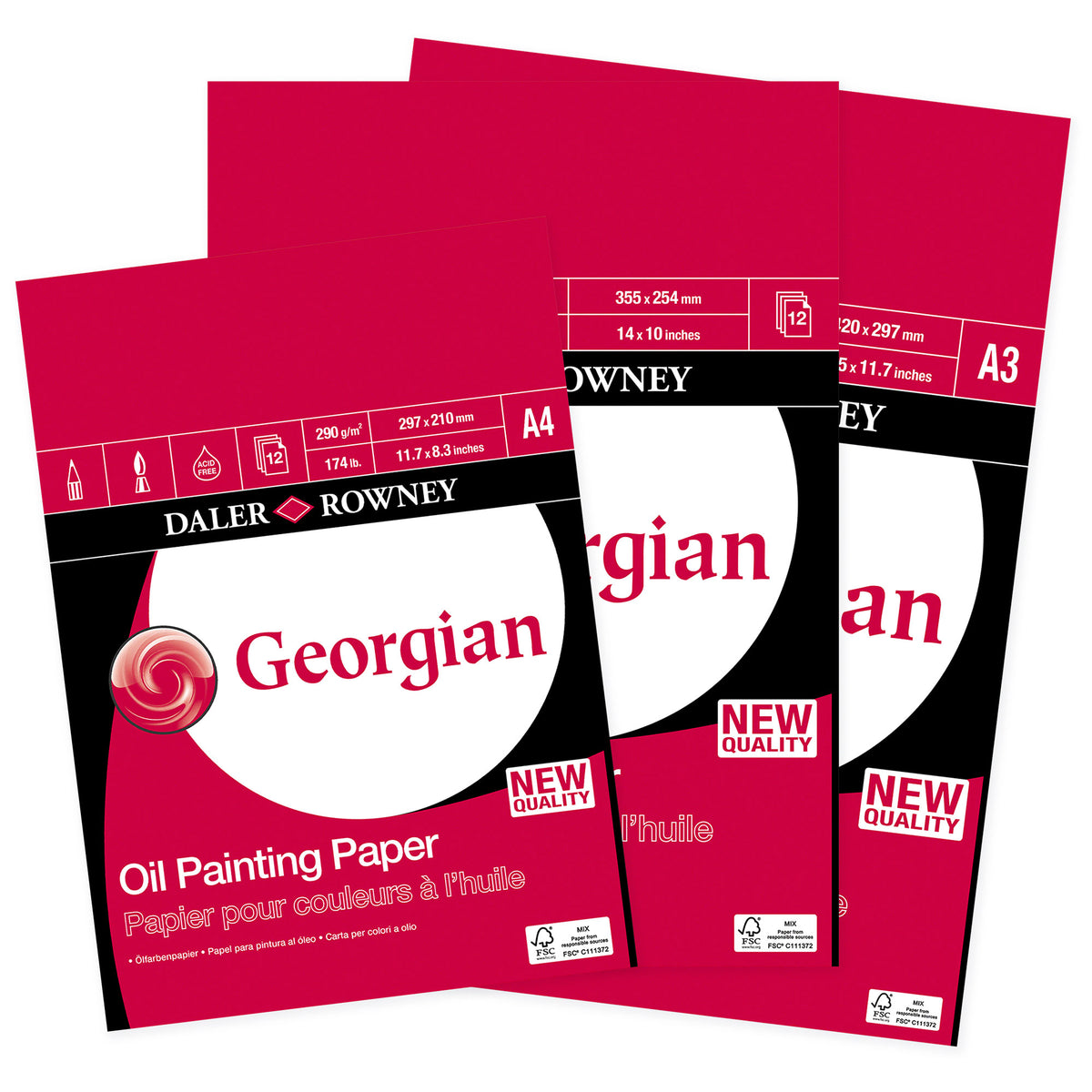
Daler-Rowney Georgian Oil Paper features an excellent surface for oil colour with a natural texture similar to canvas.
Wooden Panels
Make sure you pre-size and prime your panel before painting. Check out the ARTdiscount Blog article "How to Seal and Gesso a Wooden Panel" for more.
Follow our step-by-step check list or download and print off.
Paulownia is technically a soft hardwood — it's porous and very absorbent, so proper sealing is especially important. It’s less likely to warp than many other soft woods, but its open grain can suck in paint like a sponge if left unsealed.
ARTessentials Artists Wooden Panels
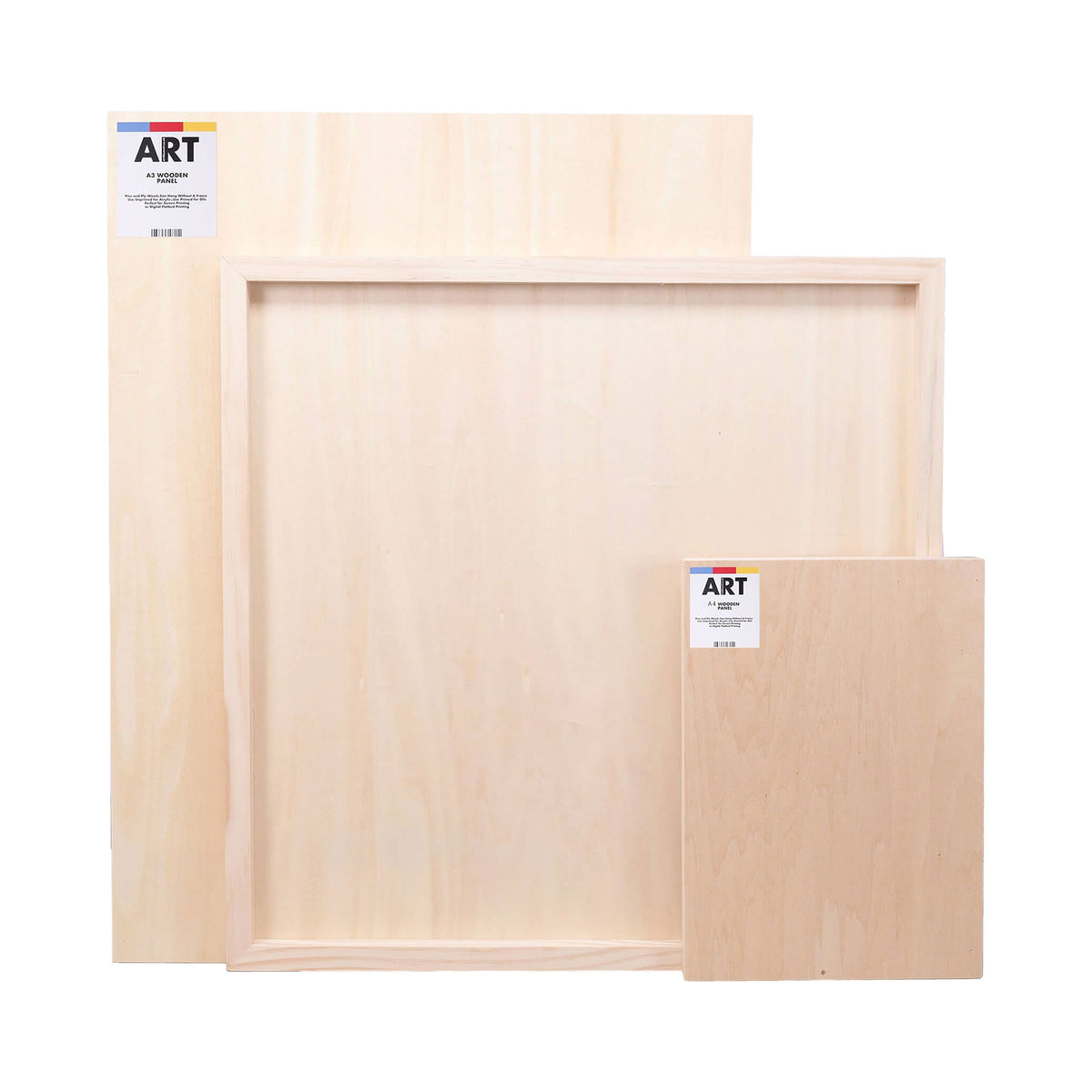
ARTessentials Cradled Wooden Panels are made of a smooth, sanded Paulownia rapid growing hardwood, reinforced to prevent warping. Sturdy and lightweight, they are perfect for both painting outdoors or in the studio.
ARTessentials Wooden Artists panels are manufactured by a leading producer of Artists supplies with worldwide distribution. The manufacturer is FSC accredited.
Global Unprimed Artists' Wood Painting Panel
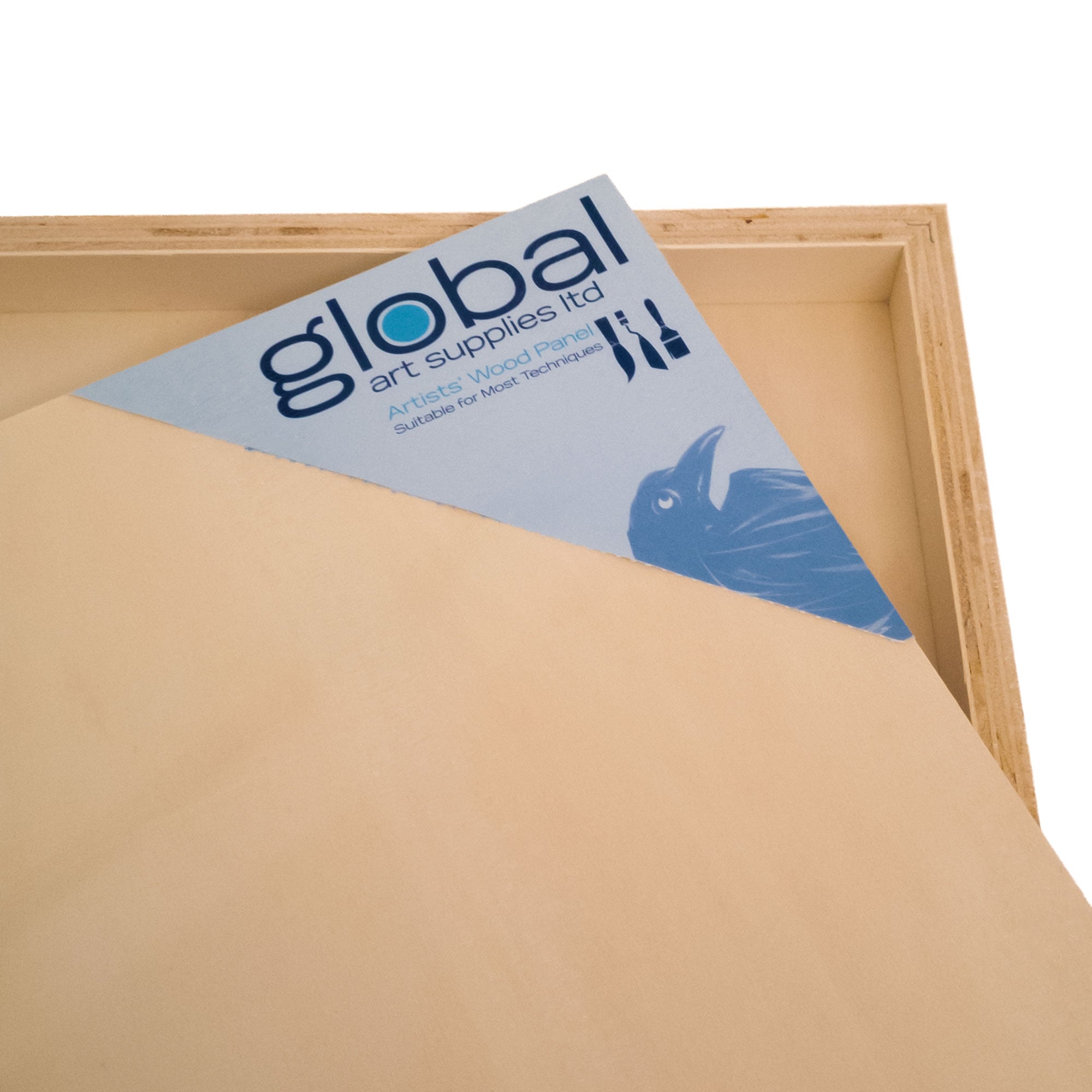
Global Unprimed Wood Painting Panels are suitable for most techniques and applications. These panels are are made from birchwood, with a natural wood, smooth finish. They're perfect for use with oils, acrylics, gouache, charcoal, pencil and airbrushing.
Made to specifications by well-known Italian producer Belle Arti.
Seawhite Cradled Wood Painting Panels - Round
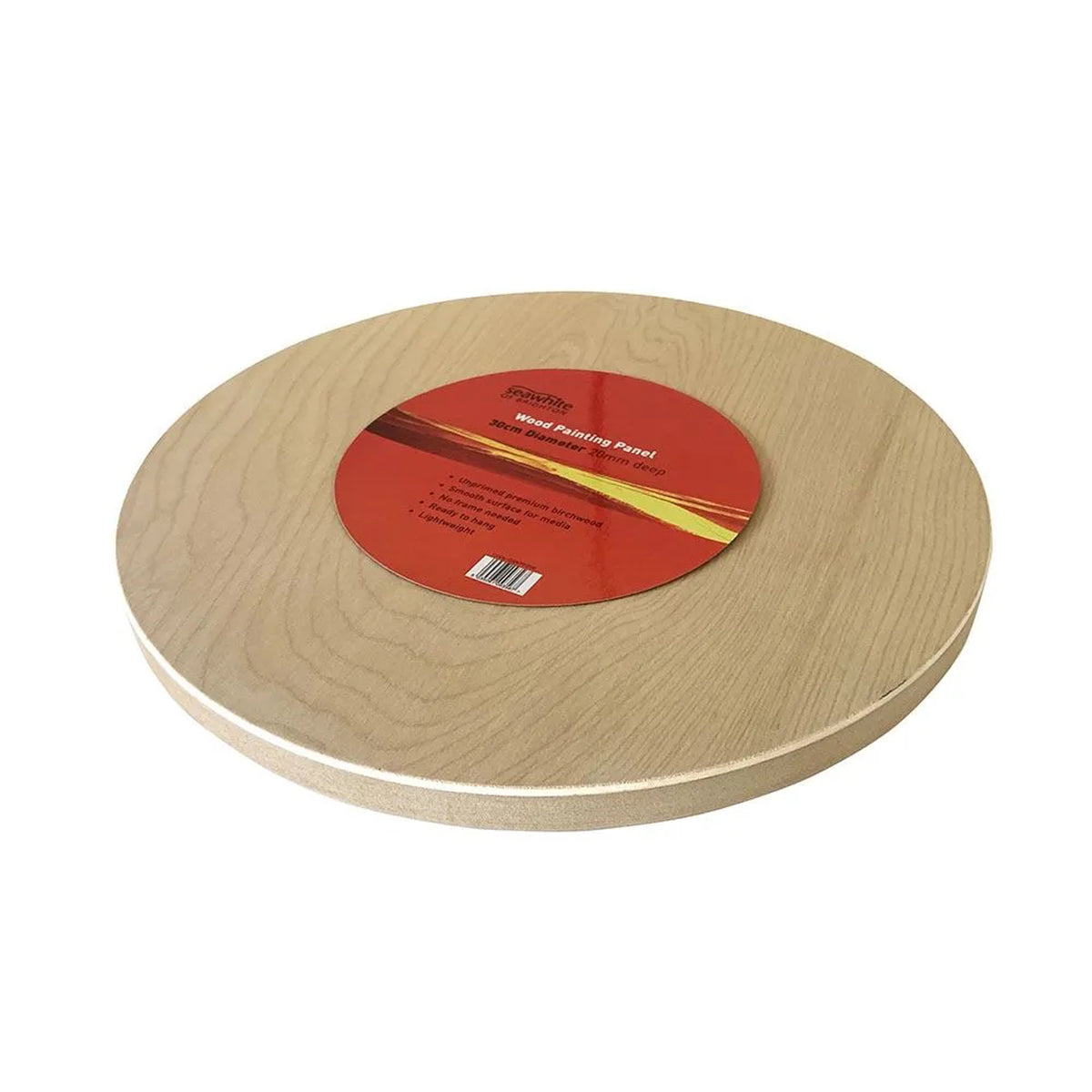
These Round Cradled Wood Painting Panels from Seawhite come in packs of 3 and offer artists a unique painting experience. Their circular shape allow for unconventional and eye-catching compositions with portraits, landscapes, and abstract work, and they work great for mandala-style artwork.
Seawhite Unprimed Cradled Panels
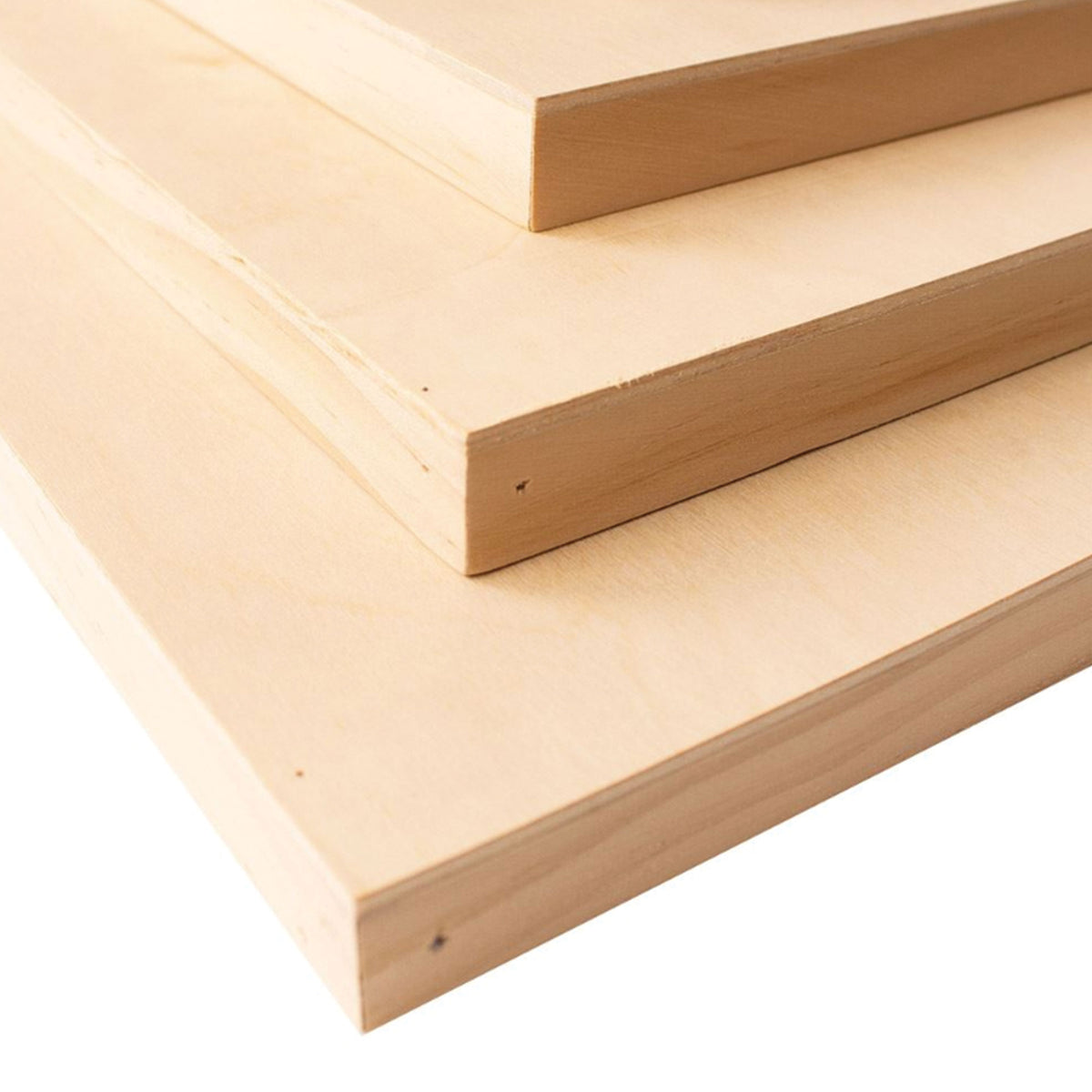
These Cradled Wood Painting Panels from Seawhite feature 18-20mm deep frames. They are a brilliant, interesting painting surface—their extra-smooth birch wood allows paint to sit in place and stay vibrant. Seawhite panels are becoming the popular alternative to canvas, have you given them a try yet?
Mix it Up!
We hope this article has inspired you to try out water-mixable oils! This great medium allows you to reap the benefits of traditional oil paints without worrying about the effects of harsh solvents. They're great for beginner artists looking to experiment with oil paints for the first time, professionals working in smaller studios, or even just those who want a quicker clean up time!
You can find a good range of water-mixable oils on the ARTdiscount website, with some of the UK's lowest prices on top brands like Daler-Rowney and Winsor & Newton. If you post your painting on social media, don't forget to tag us with #ColouringTheNation so we can see your incredible artwork!


